DIY tip: everything you need to know about sanding

Sanding is not usually the most fun part of the job. When do you use which grit and do you use a sander or a sanding pad? We give you the ideal DIY tips to get you through your next project where you get to sand your panel smooth quickly.
Looking for DIY tips for sanding your sheet metal? Sanding is not usually the most fun part of the job. When do you use which grit and do you use a sander or a sanding pad? With these DIY tips and a few moves, sanding will be done in no time! And done well, too!
Sandpaper and grit
‘When do you use which grit?’ is a common question. Actually, the grits tell you something about the surface to be sanded. The rougher the surface is, the coarser the grit you can use. Coarse sandpaper leaves slight unevenness, which you can then rub away with a fine grit. You repeat this several times with a finer grit each time. What then appears is the beautiful wood texture and the basis for even paintwork.
Coarse vs. fine grain
Sandpaper comes in endless coarsenesses, which are listed on the back of the paper and indicated by the letter P. For most sanding jobs, the numbers p60, p120 and p180 will suffice. The number stands for the number of grits per cm2. Grain 60, for example, is very coarse and grain 180 is a lot finer. The handy tip for sanding here: start with the smallest number and build up. Always sand in circular movements. This makes your sandpaper less likely to fill up with dust! This way, you can use the sandpaper longer.
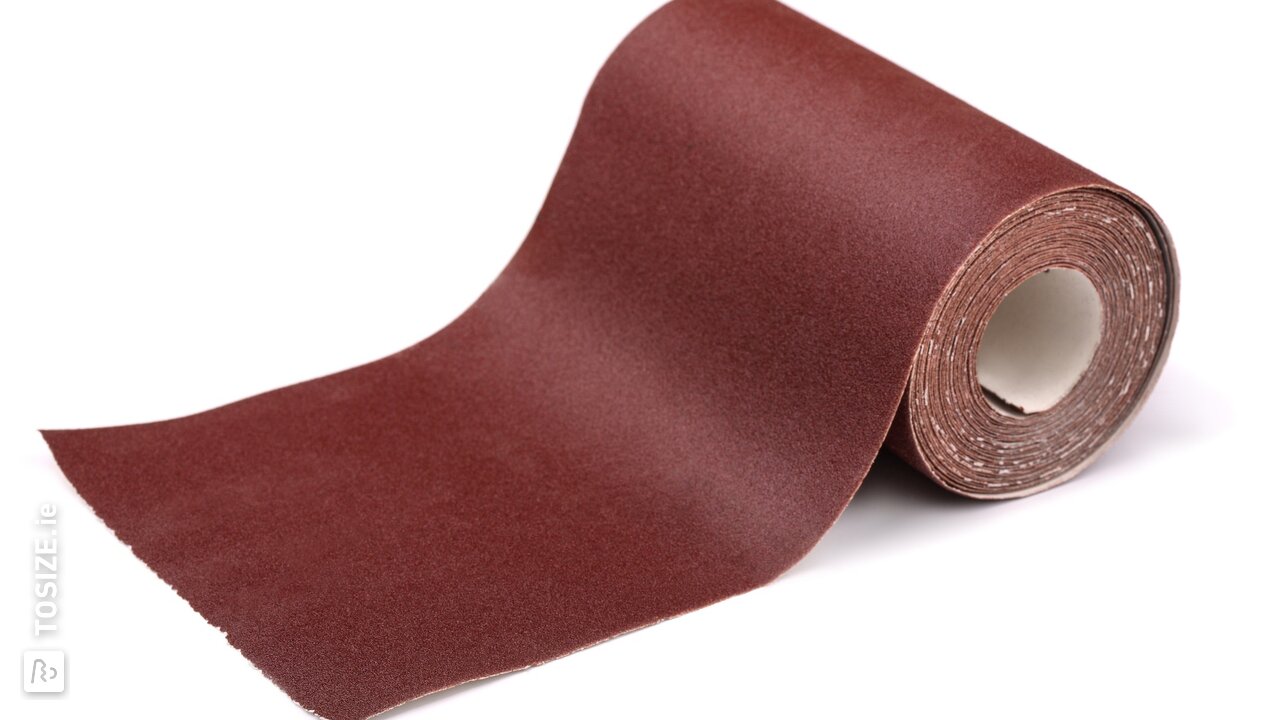
Ordering sandpaper?
We have sandpaper available in all varieties. Check out our range here. You will also find thousands of other accessories in our shop to help you make your job a success. That's really convenient!
Large surface area? Use of sander
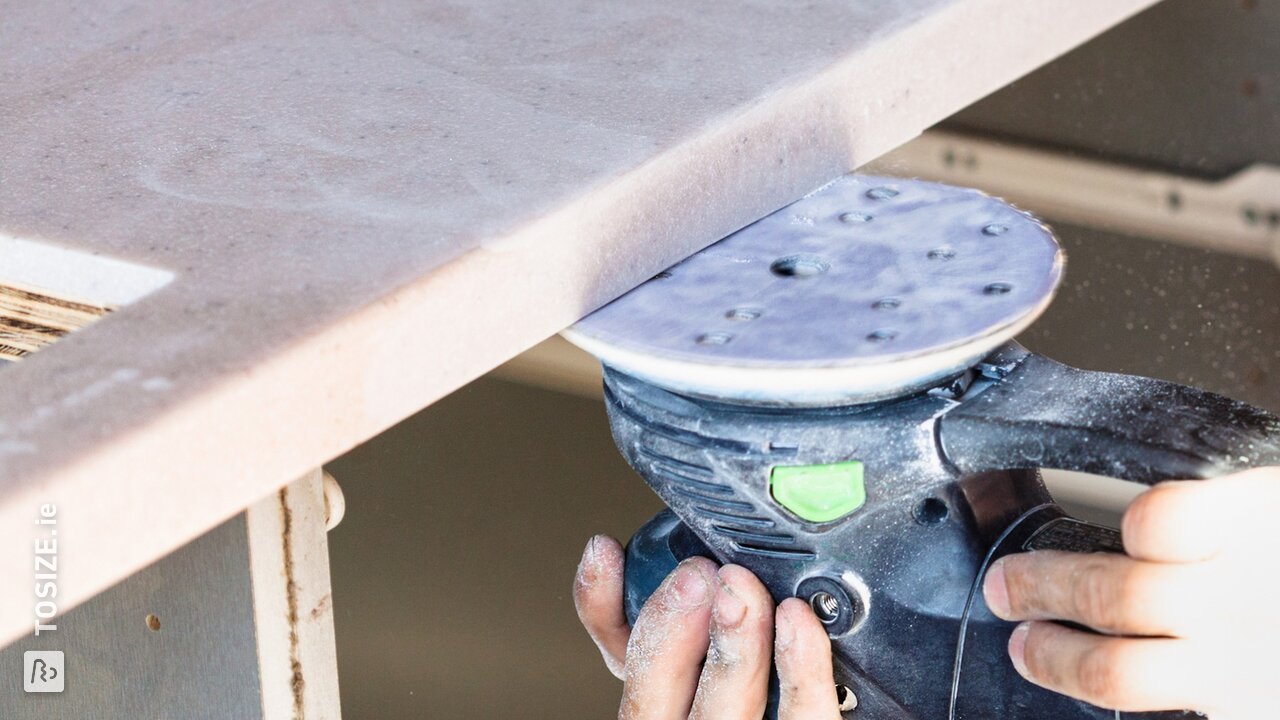
Sanders come in many types. Some focus on removing paint or other material (belt sander), others on sanding corners and edges (delta sander, multi-sander) and yet others help you sand hard-to-reach areas (multi-sander). Do you have a large area to finish? Make it easy on yourself and use an orbital sander. Make sure you sand the entire surface with the same pressure for an even result.
Using a sanding bobbin
The best and easiest DIY tip for sanding your sheet material is: use at least one sanding spool when sanding. This is your littlest friend during your sanding job. A sanding spool, also known as a sanding block, saves your nails! You can wrap a piece of sandpaper around it and it is ideal for levelling small scratches, paint residues or small surfaces.
Advantage of waterproof sandpaper
Does dust-free sanding sound like music to your ears? The DIY tip when it comes to dust-free sanding: use waterproof sandpaper. This is sandpaper that you moisten beforehand so you don't have your barn or possibly living room covered in dust. It is also very sturdy to use and is available in a fine grit. Ideal to use for the last round(s) of sanding.
Degreasing before sanding
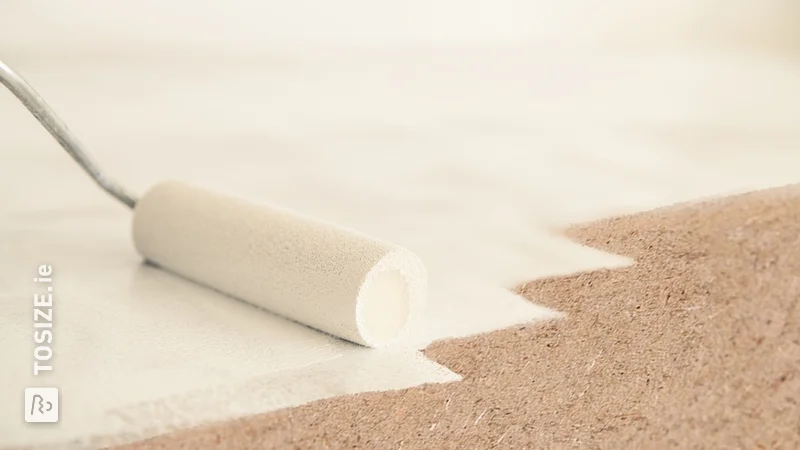
One last tip: degrease the surface before you start sanding and wear a dust mask to avoid breathing in dust. And have you finished sanding? Carefully remove any residual dust on the wood. Now the painting job can begin!